At Abundant Wellness Functional Medicine,
We believe you are a whole person with a mind, body and spirit, and strive to create integrated plans that help you feel your very best.

What is Neurofeedback?
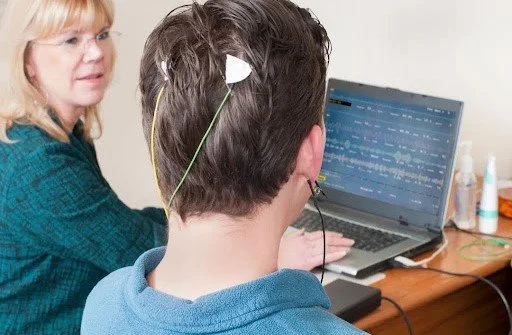
Neurofeedback is a type of biofeedback that utilizes the concepts of operant conditioning and neuroplasticity to “train” your brain to function at its optimal level. This technique uses real-time electroencephalography (or EEG) and a system of rewards to train the brain to generate more of the desired frequencies and less of others. It targets the underlying brain dysregulation associated with your health concerns so that you may experience better control of your behavior, a decrease in aggravating symptoms, and enhancement of performance at work or school.
What To Expect During a Neurofeedback Session
At the start of each session, electrodes are placed on your scalp to measure brain wave activity in areas of dysregulation (based on the results of your QEEG). You will then receive auditory or visual “rewards” when your brain is functioning within an optimal threshold, whether that’s playing a game, enjoying a video, or watching real-time EEG feedback of your brain wave activity. Through repetition, these positive neural pathways are reinforced, whereas negative ones are reduced or eliminated. The goal is to enrich neural connections and provide brain flexibility for optimal performance and cognition.
Does Neurofeedback Work?
Decades of research have shown that neurofeedback can be used as an effective treatment for many mental and developmental disorders including autism spectrum disorders, ADHD, anxiety and depression, OCD, and bipolar disorder. It may also help people with mild traumatic brain injury, insomnia, migraines, and addiction. Scientific studies on the effects of neurofeedback go back to the early 1950’s and now boast hundreds of peer reviewed journal articles supporting its efficacy. The technology continues to advance leading to more innovative methods and successful integrations that have been added to the growing evidence of neurofeedback’s success in changing brains and lives.
What is qEEG Brain Mapping?
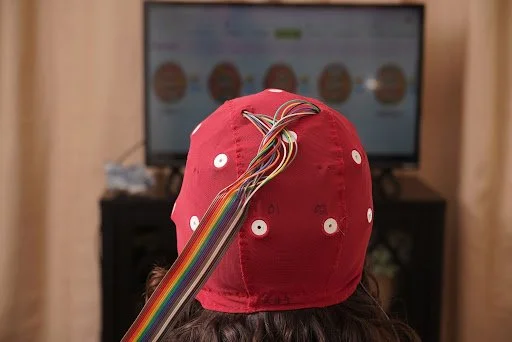
A quantitative encephalogram, referred to as a QEEG or “brain map” is a diagnostic tool that measures brain wave activity. As opposed to an EEG, which is commonly performed in hospitals to diagnose epilepsy and other neurological disorders, the “quantitative” aspect uses the same information and analyzes it using statistical and numerical methods. The results of which show how your brain functions. It reveals how different locations of your brain communicate with each other and the amount of power, or amplitude, in each specific area. Although not solely used for diagnosis, the information can help inform various presentations of anxiety, depression, processing issues, and brain injury, just to name a few. This detailed report provides a “road map” to train your brain to work more effectively, while mitigating aggravating symptoms that prevent you from living your best life. Best of all, brain mapping is non-invasive, painless, and has no side effects.
How Can a qEEG Help Me?
Although Neurofeedback can be utilized based on symptoms alone, it is recommended that a QEEG be performed so that your training is individualized. Brain training is not a “one size fits all” therapy. For example, there are different “types” of depressive patterns (such as alpha asymmetry) and a QEEG can identify the ones that are specific to you and your symptoms. By locating the areas of dysregulation through a brain map, the training can be more effective, which helps you reach your goals and optimize your brain function.
What Happens During the qEEG Acquisition?
Prior to your appointment, you will have a phone consultation with our clinician to discuss preparation for your map. During the brain map acquisition, you will wear a cap on your scalp that measures the electrical discharges from 19 different areas of your brain. The process from beginning to end usually takes 45-60 minutes and is painless and non-invasive. The data acquired will then be analyzed over the next week and an individualized report will be generated. Once the report is complete, you will consult with Andrea in person or remotely to discuss the results and formulate a treatment plan that aligns with your personal goals.
What Clients are Saying